
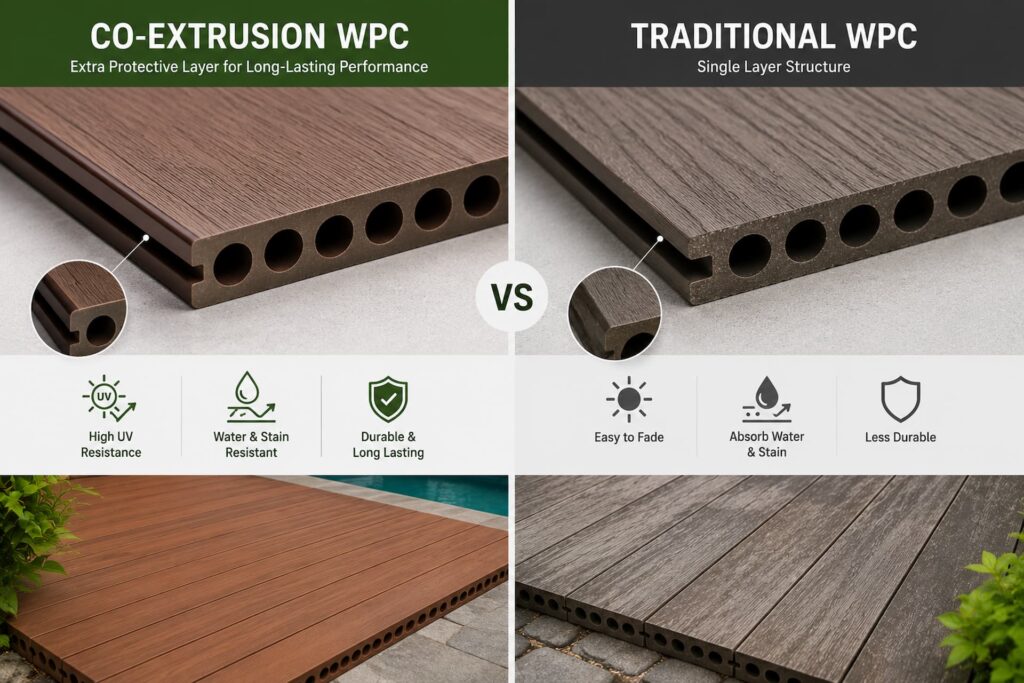
As outdoor living spaces continue growing in popularity, choosing the right WPC material has become increasingly important for distributors, contractors, and homeowners.
One of the most common questions in the composite industry is: What is the difference between co-extrusion WPC and traditional WPC? Understanding these differences is critical when selecting products for long-term outdoor performance.
What Is Traditional WPC?
Traditional WPC, also known as first-generation WPC, is made by blending wood fibers, recycled plastic, and additives into a single-layer composite material.
Advantages include:
- Cost-effective pricing
- Natural wood-like appearance
- Easy processing
- Good structural performance
Traditional WPC is widely used for:
- Decking
- Fencing
- Wall cladding
- Outdoor decorative applications
However, because the entire profile shares the same exposed surface, traditional WPC may experience surface fading, water absorption, staining, and mold growth over time — especially in harsh outdoor environments.
What Is Co-Extrusion WPC?
Co-extrusion WPC, also called second-generation WPC or capped composite, features an additional protective outer layer surrounding the composite core. This outer shield significantly improves:
- UV resistance
- Water resistance
- Stain resistance
- Scratch resistance
- Color stability
The co-extrusion layer acts as a protective barrier against outdoor weather exposure.
Which One Lasts Longer?
In most outdoor applications, co-extrusion WPC generally lasts longer than traditional WPC due to its enhanced surface protection.
- Traditional WPC Lifespan: typically 10–15 years depending on climate and maintenance
- Co-Extrusion WPC Lifespan: can exceed 20 years with proper manufacturing quality
Performance depends heavily on material formulation, UV additives, manufacturing quality, and installation conditions.
Why Co-Extrusion Is Popular in the U.S. Market
The U.S. market increasingly prefers co-extrusion WPC because many regions experience:
- Strong sunlight
- High humidity
- Heavy rain
- Snow and freeze cycles
- Coastal salt exposure
Co-extrusion technology helps improve long-term outdoor durability under these conditions.
Surface Performance Comparison
UV Resistance
Co-extrusion WPC offers significantly better UV protection and reduced fading.
Water Resistance
The capped layer helps minimize moisture penetration and swelling.
Stain Resistance
Traditional WPC may absorb oil or dirt more easily, while capped WPC surfaces are easier to clean.
Scratch Resistance
Co-extrusion surfaces typically perform better against daily wear and traffic.
Is Co-Extrusion More Expensive?
Yes. Co-extrusion WPC usually costs more due to additional material layers, more advanced production technology, and higher raw material costs. However, many buyers consider the higher durability and reduced maintenance worth the investment.
Which One Should You Choose?
Choose Traditional WPC if:
- Budget is the main concern
- Project conditions are moderate
- Shorter lifespan is acceptable
Choose Co-Extrusion WPC if:
- Long-term outdoor performance is critical
- UV resistance is important
- Premium appearance is required
- Lower maintenance is preferred
UrbanCore Co-Extrusion Solutions
UrbanCore provides both traditional and co-extrusion WPC products for global markets. Our co-extrusion solutions are designed for outdoor durability, modern architectural appearance, long-term color stability, and high weather resistance. We support OEM and factory-direct supply for distributors and project partners worldwide.